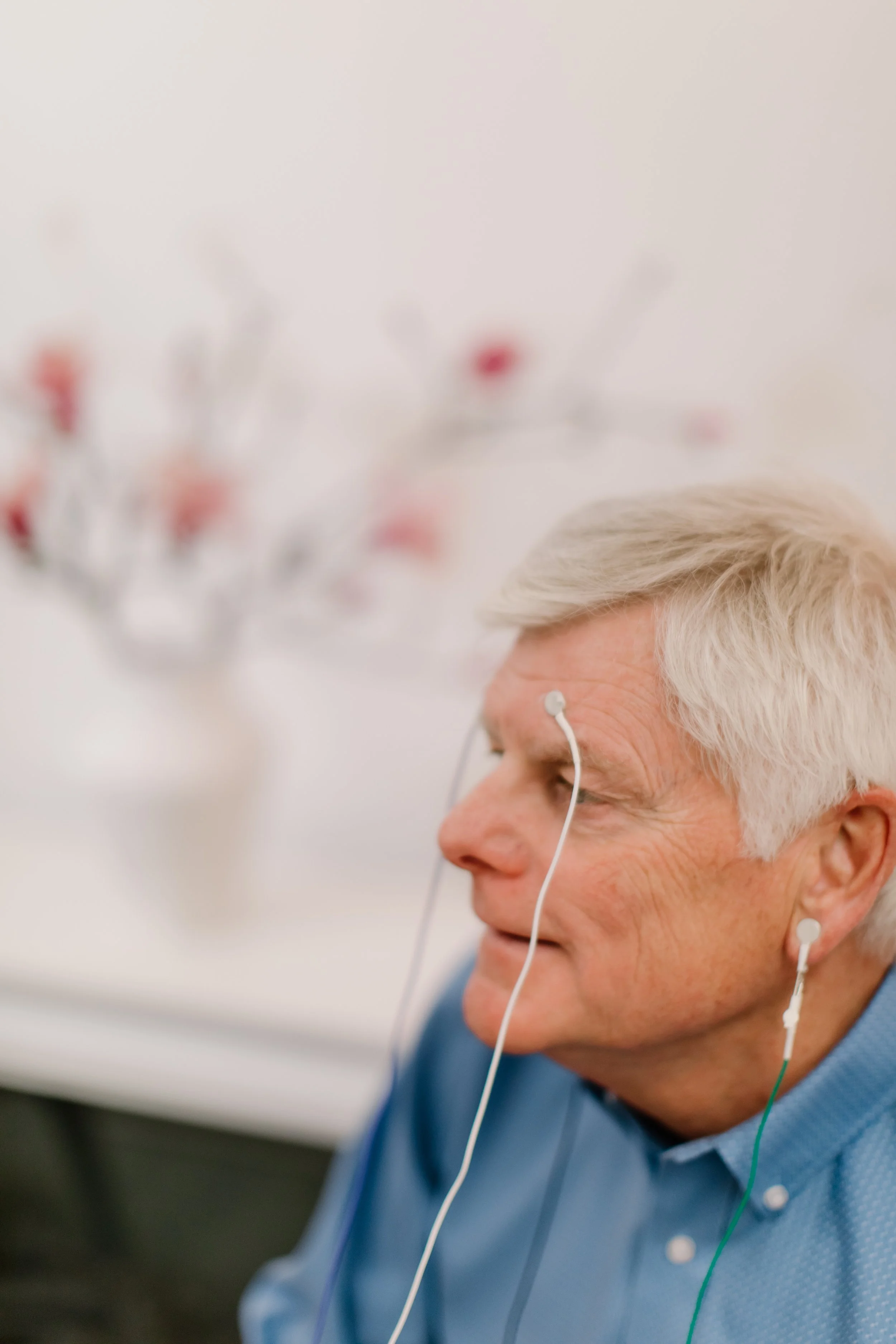
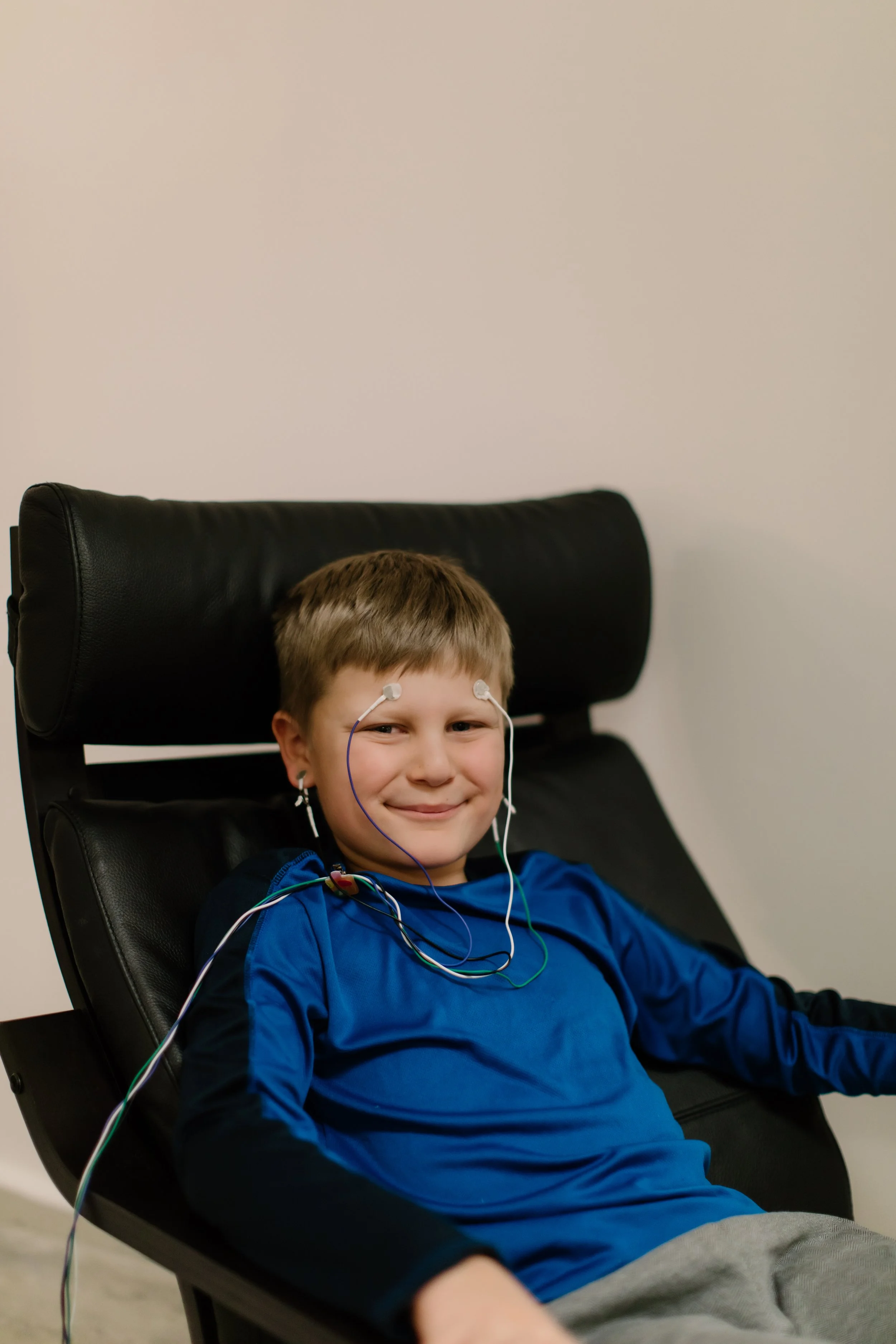
Direct LENS Neurofeedback is a non-invasive brain training technique that uses low-intensity electromagnetic waves to stimulate specific brain areas.
What makes LENS neurofeedback therapy so different is that it is passive. LENS does not “train” brainwaves like other types of traditional neurofeedback therapy, which target only specific sites and requires the client to participate in the process of learning to control their brainwaves through visual/audio monitors.
LENS neurofeedback helps the entire brain to regulate and rebalance itself by “dis-entraining” or freeing the brain from it’s frozen maladaptive state or defensive looping mechanisms caused by trauma or stress. LENS effectively disrupts the old neural connectivity that causes the dysfunctional patterns and resets them for much faster and lasting results, bringing the brain back to it’s factory setting. Neuroscientists believe that the brain’s defenses against stressors and trauma can create a “neural gridlock.” LENS works around these blockages. LENS allows the brain to “reboot,” restoring optimal functioning.
The client doesn’t do or say anything, and each session lasts about 20-30 minutes. It’s the difference of resetting the brain and nervous system instead of training it. The LENS signal goes directly to the problem area to gently disrupt it, helping the brain to make positive changes, naturally.
What is LENS Neurofeedback?

Who can benefit from
LENS Neurofeedback?
LENS Can be beneficial for clients of all ages starting from children and infants as young as six months, to the elderly. LENS can also be administered on animals such as cats, horses, dogs and monkeys.
As a LENS provider, I want to strongly differentiate that LENS neurofeedback targets underlying problems (symptoms), and does not address diagnoses, as I am not a medical provider.
LENS has an 85% success rate in helping lessen symptoms oftentimes seen in anxiety, depression, ADHD, and other cognitive and mood disorders.
-
Diagnostic Area:
ADHD, Traumatic Brain Injury, Autism Spectrum Disorder, Asperger’s
Underlying Functional Problems:
Problems sequencing, memory, providing and maintaining attention, concentration, clarity, organization
-
Diagnostic Area:
Depression, Unresolved Grief and Loss, Explosive Disorder, Bi-Polar
Underlying Functional Problems:
Anger, Sadness, Explosiveness, loss of interest, sleep disturbances, changes in weight or appetite, worthlessness
-
Diagnostic Area:
Paralysis, Spasticity, Clumsiness, Progressive Diseases (Parkinsons, Alzheimer’s MS), Stroke
Underlying Functional Problems:
Lack of grace, problems with hand-eye coordination, balance, increased muscle tone, tremors
-
Diagnostic Area:
Depression, Lack of motivation
Underlying Functional Problems:
Problems initiating tasks, shifting from one activity to another, and/or completing tasks
-
Diagnostic Area:
OCD, Anxiety, ADHD, Anxiety PTSD, Panic Attacks, Dissociative Problems, Sleep Disorders
Underlying Functional Problems:
Obsessions and compulsions, Uncomfortable contained energy, persistent anxious feelings, restlessness, rumination, agitation, irritability, distractibility, difficulty breathing, heart palpitations, tremor exacerbation, sleep interruption
-
Diagnostic Area:
Personality disorders, Borderline Personality Disorder, Seizures (Epilepsy and non clinical)
Underlying Functional Problems:
Hyper-reactivity, hypersensitivity, multiple chemical sensitivities
-
Diagnostic Area:
Drug or alcohol addiction and dependency, eating disorders, substance abuse
Underlying Functional Problems:
Drug or alcohol addiction and dependency, eating disorders, substance abuse
-
Diagnostic Area:
Chronic Fatigue (Except when complicated by residual infections, toxics or metabolic condition)
Underlying Functional Problems:
Fatigue, or fatigue as a phenomenon secondary to the effort of trying to overcome the pain and/or the above impediments to functioning more easily
-
Diagnostic Area:
No diagnosis
Underlying Functional Problems:
Can increase performance in sports, school, or overall health and wellness